Garden hand-tool manufacturing
A tool that looks simple on a shelf is the output of seven controlled gates and nine material families, packed and shipped under rules that change with the destination. This article sets out that route in public terms. It contains no customer drawing, specification or programme record.
1 The floor
One site since 1974 — the same tooling library and the same hardening practice, which is what makes the rest of this page specific rather than generic.
Everything else on this page describes a route. This section is about the place that route runs through, because a process description is only worth reading if the plant behind it is real.

1.1 Where it started, in 1974
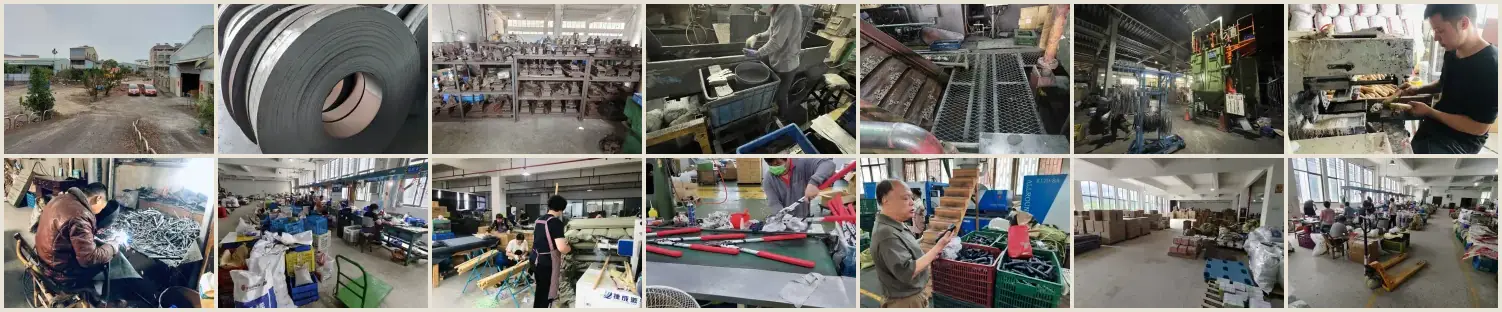
Birdland began at this site in 1974 and still manufactures, warehouses and ships from it more than fifty years later. It is not a sourcing office opened to front a supply chain, and it is not a plant we moved into after the fact — it is the original works.
That continuity is the reason the rest of this page can be specific. Fifty years in one place is fifty years of the same tooling library, the same hardening practice and the same people correcting each other, which is what a control point actually is.
2 The catalogue
A decade-old archive, published for breadth, not as a price list. Nothing in it is a current quotation.
Birdland keeps a product catalogue that is roughly a decade old. It is published as an archive, not as a price list: the items in it are not current quotations and nothing in it should be read as an offer. It is worth reading for one reason — breadth.
- Every item was approved by the customer it was made for. Nothing in it is a concept, a render or a proposal. Each product passed a customer's own approval before it was produced.
- All of it is ODM work on tooling Birdland owns. The dies and moulds behind these products are ours. That is why an item from this catalogue behaves differently from a new design: the tool already exists, so the cost is known and stable rather than quoted against a tool nobody has cut yet.
- Owned tooling is what protects the margin. A buyer taking an existing item to market is not amortising a new tool and is not exposed to the cost drift that comes with proving one out.
- Its purpose is evidence, not selection. Read it as the accumulated production and quality-control experience behind the seven gates described below — the range this floor has actually held to specification over decades.
If something in it is close to what you need, starting from that item is usually the fastest and cheapest route. If it is not, the same experience is what the rest of this article describes.
The file opens in a new tab. It is an archive: use it to judge range and capability, and ask us before treating anything in it as available.
3 OEM routes
Three routes: our tooling, your drawing, or a shared development. What differs is who owns the tooling and who carries the risk.
OEM is not one thing. Almost every programme sits on one of two levels, and the first useful question is not what it will cost — it is which level you are working at. That answer moves the tooling, the lead time and the order size together.
3.1 Specification OEM
The shape already exists. You change what it is made of. The geometry has been proven in production, so what moves is the material grade, the hardness band, the surface treatment, the grip compound, the colour, the marking and the pack.
No new tool is cut. The cost comes from a part that has been built before rather than an estimate against one nobody has built, sampling runs in weeks, and the order size can be smaller because there is no tooling investment to spread.
The shallowest version of this route changes nothing about the product at all — only the brand, the marking and the pack. It is the fastest way to put a range on a shelf under your own name. This route runs on the tooling described in the catalogue: ours, and long since amortised.
3.2 Design OEM
You bring the shape. New dies or moulds are cut to your drawing and every lever is open, including the geometry itself.
That investment has to be spread, so the order size is larger and sampling is measured in months rather than weeks. What you get back is a product nobody else can order, and a tool that exists only for your programme.
Most buyers assume they need this route. Many do not: it is worth checking whether specification OEM reaches most of what you want before committing to a tool. We would rather say so early than quote a tool you did not need.
3.3 What each route lets you change
| Lever | Specification OEM | Design OEM | Described in |
|---|---|---|---|
| Material family and grade | Open | Open | Material families |
| Hardness band on the working edge | Open | Open | Heat treatment |
| Surface treatment and colour | Open | Open | Surface treatment |
| Grip compound and feel | Open | Open | Grips and soft compounds |
| Marking and branding | Open | Open | Surface treatment |
| Packaging and retail presentation | Open | Open | Packaging |
| Joining method and fasteners | Limited to the existing tool | Open | Joining and assembly |
| Dimensions and geometry | Fixed by the existing tool | Open | Tooling |
| Exclusivity of the shape | No | Yes | 3.4 below |
3.4 How tooling is arranged
There is no standard tooling price and no single ownership policy, and any page that published one would be misleading you. It is set per programme. These are the arrangements that actually get used:
| Arrangement | Who funds it | Who holds it | Typically paired with |
|---|---|---|---|
| Existing Birdland tooling | Not applicable | Birdland, already amortised | Specification OEM |
| Customer-funded | Customer | Customer | Full exclusivity of the shape |
| Shared | Split between both parties | Held jointly | A market restriction — see below |
| Birdland-funded | Birdland | Birdland | A volume commitment |
- Where a tool is funded jointly and held jointly, it is normally paired with a restriction on us: Birdland does not sell that product into your market. The tool may be shared; the market is not.
- That clause is what “never our brand” looks like in a contract rather than on a homepage. It is also the reason the two things on this page fit together — the catalogue can be shown publicly because those tools are ours and unrestricted, while anything carrying a market restriction never appears in it, and never will.
What moves the line. Four things, in practice: how complex the part is, how long we have worked together, the payment terms, and the volume. That is why tooling cost, order size and lead time are described here in relative terms only — a real figure depends on those four, and a number published on a public page would be wrong for most readers and stale for the rest.
Tell us the volume, the market and the timing, and the arrangement can be structured against them.
4 Production route
Seven gates. A tool is only as good as the gate it was allowed to pass.
Each gate below takes a defined input, holds one thing under control and hands the part on. The routes listed at each gate are alternatives, not a sequence: choosing between them is what a specification actually decides.
How common is how often the option appears in garden hand tools sold through European and North American DIY retail. Relative cost is its cost against the alternatives in its own group — a position, not a price. Both are ordinal judgements about that channel rather than market data.
4.1 Material intake
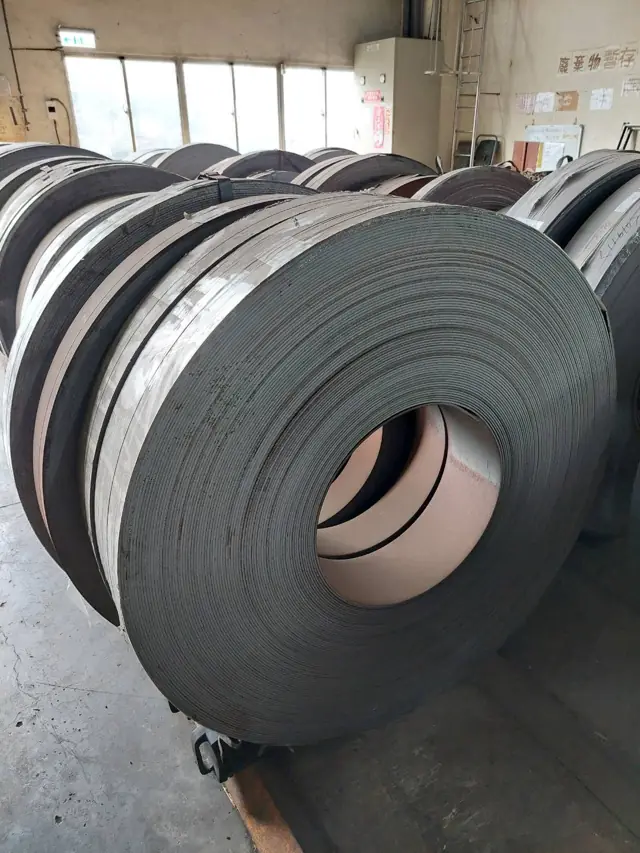
Nothing downstream can be better than what arrives. Grade, thickness, temper and traceability are fixed here, and a substitution made at this gate quietly changes hardness, corrosion life and forming behaviour further along the route.
- What enters
- Steel strip and bar, tube, resin, timber billets, fabric rolls.
- Control point
- The specified material must suit the intended forming route and the service life claimed for the finished tool.
- A buyer should ask
- Which material property is critical for the intended use — edge retention, corrosion life or stiffness?
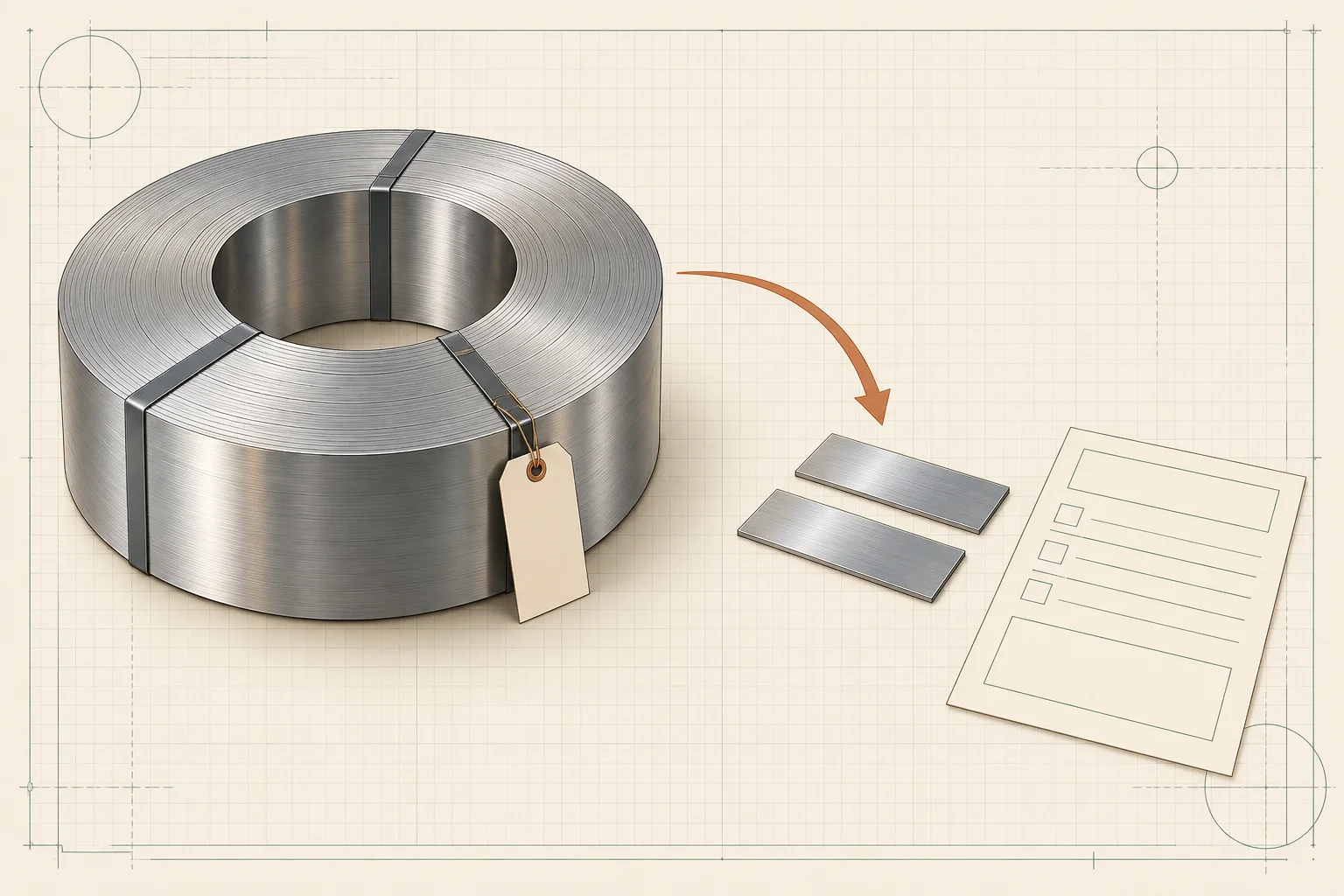
- OptionHow commonRelative costWhy it matters
- Blade & spring steelEverywherePopularity 5 of 5MidRelative cost 3 of 5Core material for every cutting edge; mid-range costBuyer viewAdmitting this family means admitting a hardenable grade, so the mill certificate matters more than the price line: carbon content, decarburisation depth and strip flatness at intake decide the hardness band you can hold later, not the heat treatment you specify.Production viewWe check the incoming coil for decarburised skin before it ever reaches a die — a soft surface layer of a few hundredths of a millimetre survives hardening as an edge that dulls in the first season, and it is invisible once the part is plated.
- Stainless steelRegularPopularity 3 of 5Above averageRelative cost 4 of 5Premium rust-resistant blades and trowels; pricier than carbon steelBuyer viewStainless arriving at intake is two different materials: austenitic 304 cannot be hardened by heat treatment and belongs on bodies and fasteners, while martensitic 410 and 420 can — and since those two are both magnetic and visually identical, dropping the lower-carbon 410 into an edge application is the substitution no goods-in check short of a material test will catch.Production viewWe keep martensitic and austenitic stock physically separated on the rack, because the two look identical under a coolant film and a mixed batch is only discovered after quench, when half the parts come out soft.
- AluminiumRegularPopularity 3 of 5MidRelative cost 3 of 5Lightweight shafts and heads on premium lines; moderate costBuyer viewThe temper designation is the specification, not the alloy number: 6061-T6 and 6061-T4 are the same metal at different yield strengths, and a shaft supplied in the softer temper bends permanently under a load the harder one springs back from.Production viewExtrusion tolerance on wall thickness is what we watch at intake — a tube under nominal wall passes a diameter gauge and still buckles at the ferrule, so we gauge wall, not just outside diameter.
- Rigid plasticsEverywherePopularity 5 of 5LowRelative cost 1 of 5Dominant for handles and housings; cheapest structural materialBuyer viewResin at intake is defined by grade and filler, not by the word 'nylon': PA6 unfilled and PA6-GF30 differ by roughly a factor of three in stiffness, and glass content is the single line most often quietly dropped from a bill of materials.Production viewWe take moisture seriously on polyamide because it is hygroscopic — resin that has sat unsealed hydrolyses in the barrel and moulds parts that look correct and snap at the boss, so it is dried to specification before every run.
- Grip compoundsEverywherePopularity 5 of 5Below averageRelative cost 2 of 5Soft overmould grip now a standard ergonomic selling pointBuyer viewSpecify the elastomer by Shore A hardness and by what it must bond to; a TPR that is correct on polypropylene delaminates on nylon, and a grip that peels is a warranty return even though the tool still works.Production viewAdhesion in over-moulding is chemical, not mechanical, so we match the elastomer family to the substrate and hold the interface temperature — a cold substrate gives a joint that survives assembly and fails in the hand.
- TimberOccasionalPopularity 2 of 5MidRelative cost 3 of 5Heritage handle material for spades and forks; pricier than plasticBuyer viewMoisture content is the whole specification: a handle fitted at 18% and shipped into a heated European interior shrinks in its ferrule and loosens, so the number to agree is kiln-dried moisture at packing, not species alone.Production viewWe look at grain run-out rather than surface appearance — a handle whose grain leaves the side within the length of the shaft breaks across the fibres under a prying load no matter how clean the finish looks.
- FabricOccasionalPopularity 2 of 5LowRelative cost 1 of 5Gloves and straps only; low cost, limited to few SKUsBuyer viewFabric enters a metal-goods bill of materials as the item most likely to carry the chemical compliance risk — dyes, coatings and any leather trim are what a REACH or Proposition 65 question lands on first, not the steel.Production viewCut-and-sew stretch is our control point: the same roll behaves differently across its width, so panels are cut to nested markers rather than singly, which is what keeps a pair of gloves a matched pair.
4.2 Forming and shaping
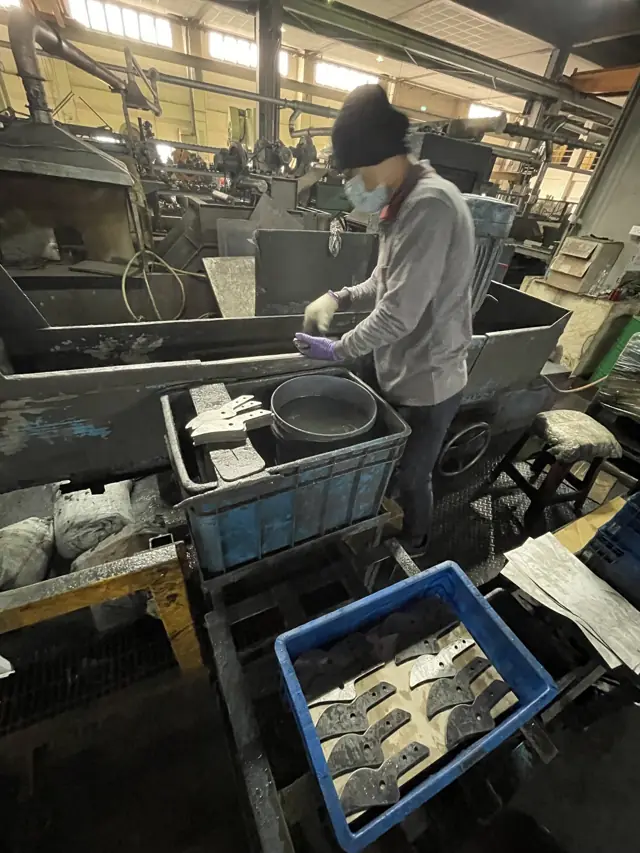
“Forming” is not one operation. A blade may be stamped from strip, hot forged for grain flow or laser cut for a low-volume profile, and each route produces a different edge condition, a different tolerance band and a different tooling cost.
- What enters
- Prepared metal, an approved profile and a maintained die set.
- Control point
- Press force, strike sequence and die clearance decide whether piece one and piece fifty thousand are the same part.
- A buyer should ask
- Which single dimension or edge condition matters most to the finished tool?
- OptionHow commonRelative costWhy it matters
- StampingEverywherePopularity 5 of 5LowRelative cost 1 of 5the default for volume blades and bracketsBuyer viewStamping is cheap per piece and expensive to change: the die carries the geometry, so a profile revision after tooling sign-off is a tooling charge and a lead-time reset, and this is the gate where a drawing should stop moving.Production viewDie clearance is set as a percentage of stock thickness, and it is what decides burr height and the depth of the sheared band on the cut face — too tight and the die chips, too open and the edge rolls, so we tune it to the material rather than to habit.
- Hot forgingOccasionalPopularity 2 of 5Above averageRelative cost 4 of 5Heavier tool heads; costlier and less common in mass DIYBuyer viewYou are paying for grain flow, not for weight: forging aligns the material along the shape so the load path is continuous, which is why a forged tang survives prying loads that fracture an equally thick stamped one.Production viewFinish temperature and the trim of the flash line are what we watch — a forging finished too cold work-hardens unevenly and carries residual stress into quench, where it becomes distortion nobody can straighten out economically.
- Cold forgingOccasionalPopularity 2 of 5MidRelative cost 3 of 5Higher-strength small parts like pivot pins; moderate extra costBuyer viewCold forging work-hardens the part as it forms it, so a cold-forged pin or rivet arrives stronger than the bar it came from and holds a tighter diameter tolerance than machining at the same price at volume.Production viewThe limit is formability, not force: material has a finite strain before it cracks, so we split the shape across progressive stations rather than chasing it in one hit, and anneal between stations when the geometry demands it.
- Laser cuttingOccasionalPopularity 2 of 5Above averageRelative cost 4 of 5Short runs or premium blade profiles; costly per partBuyer viewLaser is the right answer for short runs and prototype profiles because it removes tooling cost entirely, but it leaves a heat-affected zone at the cut edge that must be ground away before hardening on any part that will carry an edge.Production viewWe treat the cut edge as unfinished — the recast layer and the hardness gradient beside the kerf behave differently in quench, so a laser-cut blade profile gets stock left on the edge for removal.
- Tube drawingRegularPopularity 3 of 5MidRelative cost 3 of 5Shafts for forks, spades, loppers; moderate cost, fairly commonBuyer viewDrawing sets both the diameter and the wall, and wall is what carries bending load: two shafts quoted at the same outside diameter can differ by a third in stiffness, so specify wall thickness explicitly or you are buying appearance.Production viewStraightness after drawing is the control point on long shafts — residual stress from the die shows up as bow over a two-metre length, so we straighten and stress-relieve rather than selecting parts by eye.
- Tube bendingRegularPopularity 3 of 5Below averageRelative cost 2 of 5Bends stock tube into handles and frames; cheaper than drawingBuyer viewThe number to specify is the centreline bend radius against tube diameter: a tight radius thins the outer wall and wrinkles the inner one, which is where a bent handle eventually cracks in service.Production viewWe use a mandrel on thin-wall bends because the tube needs internal support to keep its section — without it the bend ovalises, and an oval tube will not accept the ferrule that was designed for a round one.
- SwagingOccasionalPopularity 2 of 5Below averageRelative cost 2 of 5Tapers or joins tube ends; niche, low-cost forming stepBuyer viewSwaging is the cheap way to taper or close a tube end, and it costs nothing in material, but the reduced section is work-hardened and slightly harder — a fair trade on a handle end, a poor one on a part that must be welded afterwards.Production viewDie alignment is everything: a swage taken off-axis produces a taper that looks fine and seats crooked in its ferrule, so we set concentricity on the fixture rather than correcting it downstream.
- Wood turningOccasionalPopularity 2 of 5MidRelative cost 3 of 5Turned wooden handles for heritage lines; pricier than mouldingBuyer viewTurning is priced by the cut, not by the wood, and every extra bead or shoulder in a handle profile is another operation — a simpler profile in a better-dried billet is a stronger handle at a lower price than the reverse.Production viewWe turn oversize and let the blank rest before final cut, because timber moves after material is removed; skipping that rest is why some turned handles come out of the warehouse slightly oval in winter.
- Injection mouldingEverywherePopularity 5 of 5Below averageRelative cost 2 of 5Dominant process for plastic handles and housings; low unit costBuyer viewUnit cost falls with volume and rises with wall thickness and cycle time, so the biggest lever on a moulded handle price is the design, not the negotiation — thick ribs are slow to cool and expensive twice over.Production viewWe manage sink marks and weld lines at the gate position, not at the polish stage — a weld line where two flow fronts meet is a genuine strength discontinuity, so it gets placed away from the load path.
- Two-shot over-mouldingCommonPopularity 4 of 5Above averageRelative cost 4 of 5Common for soft-grip handles; pricier tooling than single-shot mouldingBuyer viewTwo-shot is a single tool that makes a finished bi-material part, so it costs more up front and less per unit than moulding and assembling separately, and it removes the peel-off failure mode that a glued-on grip has.Production viewThe second shot must meet a substrate that is still chemically receptive, which is why the two shots are sequenced in one machine rather than stockpiled — a cold, aged first shot is what turns a bonded grip into a sleeve.
- Dip mouldingRegularPopularity 3 of 5Below averageRelative cost 2 of 5Dips tool ends for handle coatings; simple, fairly cheap processBuyer viewDipping gives a cushioned handle end at the lowest tooling cost of any grip method, but coating thickness is process-controlled rather than tool-controlled, so agree a thickness range and a cure standard instead of a single figure.Production viewWithdrawal speed and preheat set the film thickness, so we control both rather than the dip time alone — a hurried withdrawal leaves the film thin at the shoulder, which is exactly where the grip is gripped.
4.3 Heat treatment
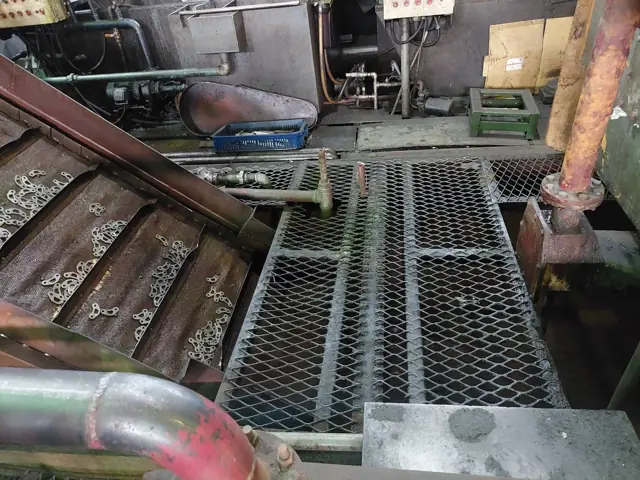
Hardness is created here, not bought. The same steel can leave this gate soft and tough or hard and brittle, so hardness is specified as a band rather than a maximum. Local hardening treats only the working edge and leaves the body ductile.
- What enters
- Formed steel parts and a defined hardness band.
- Control point
- Temperature, quench rate and tempering set hardness, toughness and how much the part distorts.
- A buyer should ask
- What hardness band does the working edge need, and what is it trading away?
Existing technical diagram
- OptionHow commonRelative costWhy it matters
- Through hardeningRegularPopularity 3 of 5Below averageRelative cost 2 of 5Hardens solid steel parts like trowel blades; simple, low costBuyer viewThrough hardening makes the whole section hard, which is right for a trowel blade and wrong for anything that must absorb shock, because a fully hard part has nowhere ductile left to yield before it cracks.Production viewSection thickness drives quench severity — the same steel through-hardens in a thin blade and only case-hardens in a thick one, so we set the quench to the section rather than to the grade.
- Quench & temperCommonPopularity 4 of 5Below averageRelative cost 2 of 5Standard treatment for spring steel blades and springs; low costBuyer viewHardness is meaningless without the tempering step behind it: as-quenched steel is hard and brittle, and the temper is what buys back toughness, so ask for the hardness band after tempering and the tolerance on it.Production viewWe temper promptly after quench rather than letting parts sit — untempered martensite is under enormous residual stress, and a batch left overnight can crack in the basket before anyone has touched it.
- Induction (local) hardeningRegularPopularity 3 of 5MidRelative cost 3 of 5Hardens only the cutting edge; needs dedicated equipment, moderate costBuyer viewLocal hardening puts hardness only where the tool cuts and leaves the body ductile, which is the correct answer for a pruner blade; what you should specify is the case depth and where the hardened zone starts and stops.Production viewCoil geometry and dwell decide the hardened pattern, so we prove the pattern by sectioning and etching a sample rather than trusting a surface hardness reading, which cannot see how deep the case actually runs.
- Solution annealingRarePopularity 1 of 5MidRelative cost 3 of 5Stainless-specific heat treatment; rare outside premium stainless tool linesBuyer viewThis is a stainless-specific step that dissolves carbides back into solution and restores corrosion resistance after forming or welding; without it a welded stainless part can rust in a line along the heat-affected zone.Production viewThe cooling rate out of solution temperature is the whole point — cool too slowly through the sensitisation range and chromium carbides precipitate at the grain boundaries, undoing the treatment you just paid for.
- Stress reliefOccasionalPopularity 2 of 5LowRelative cost 1 of 5Reduces warping after forming; cheap, occasional extra process stepBuyer viewStress relief is a cheap insurance step, not a strength step: it removes the locked-in stress left by forming so the part does not move later, and it is the fix for components that leave tolerance in the warehouse rather than on the line.Production viewWe relieve after heavy forming and before final machining, because relieving afterwards just moves the finished dimension — the order of operations is where this step earns its cost.
- Hardness banding by gradeOccasionalPopularity 2 of 5LowRelative cost 1 of 5Sorts output into hardness grades; cheap QC step, not universalBuyer viewBanding sorts output into hardness ranges instead of accepting a single average, and it is what turns a hardness figure into a guarantee — a mean of HRC 58 says nothing about how many parts left the line at 52.Production viewWe treat the band as a process control, not a sorting operation: if parts need sorting to meet the band, the quench is drifting, and the useful response is to fix the furnace rather than to grade the output.
4.4 Tooling
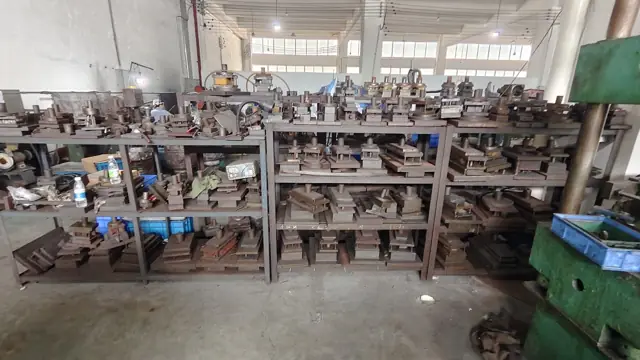
Tooling is the part of a programme a buyer never sees and always pays for. A worn die does not fail loudly; it drifts, and the drift appears as a dimension slowly leaving tolerance across a production run.
- What enters
- Approved geometry, and dies and fixtures kept in known condition.
- Control point
- Tool condition and maintenance interval are what hold repeatable geometry over a long run.
- A buyer should ask
- Which feature depends most on tooling repeatability rather than on operator skill?
Existing technical diagram
- OptionHow commonRelative costWhy it matters
- Progressive diesCommonPopularity 4 of 5Above averageRelative cost 4 of 5High-volume stamping tooling; expensive investment, common for big brandsBuyer viewA progressive die is a capital item that pays back in unit price and lead time at volume, and it is normally the largest single tooling line in an OEM programme — settle ownership and amortisation in writing before it is cut.Production viewStrip layout decides material yield, and yield is the quiet half of the part cost — a nested layout that saves a few millimetres of pitch pays for itself across a run far faster than any press-speed gain.
- Single-station diesRegularPopularity 3 of 5Below averageRelative cost 2 of 5Simple tooling for low-volume stampings; cheaper than progressive diesBuyer viewSingle-station tooling is the right economics below the volume where a progressive die pays back: cheaper to cut, slower to run, and far cheaper to modify when a profile is still settling.Production viewThe trade is handling between stations, which is where positional error enters, so we fixture the transfer rather than the operator — repeatability at a single station is easy, repeatability between them is the work.
- Trim & pierce toolsRegularPopularity 3 of 5Below averageRelative cost 2 of 5Secondary stamping operations; moderate tooling cost, fairly commonBuyer viewThese secondary tools are where hole position and edge condition are actually set, so a drawing that tolerances the hole to the part outline rather than to a datum will be interpreted differently by every supplier who quotes it.Production viewWe pierce before hardening wherever the design allows, because a hole put into hardened steel needs grinding or EDM and turns a cheap operation into an expensive one.
- Injection mouldsEverywherePopularity 5 of 5HighRelative cost 5 of 5Needed for every plastic part; the most expensive tooling categoryBuyer viewThe mould is usually the largest tooling cost in a plastic programme, and steel grade and cavity count are what you are buying — a hardened tool costs more and survives the volumes that a pre-hardened one will not.Production viewCooling layout inside the tool sets cycle time and warpage together, so we treat the water circuit as part of the part design; a tool that cools unevenly makes parts that bow no matter how the machine is tuned.
- Welding jigsOccasionalPopularity 2 of 5LowRelative cost 1 of 5Simple fixtures for welded assemblies; cheap, used only occasionallyBuyer viewA jig is cheap, and it is the only reason a welded frame is the same shape on the first and last unit of a run — the absence of one shows up as assemblies that need forcing to fit their own fasteners.Production viewWe design jigs for heat, not just for position: a fixture that clamps a frame rigidly while it is welded locks in distortion, so the clamping sequence has to allow the assembly to move and then settle.
- Assembly fixturesRegularPopularity 3 of 5LowRelative cost 1 of 5Keeps assembly consistent across lines; low individual tooling costBuyer viewAssembly fixtures are what make hand assembly repeatable across shifts and lines, and they are cheap enough that their absence is a process decision rather than a cost one.Production viewThe fixture we care most about is the one that makes the wrong build physically impossible — poka-yoke geometry catches a reversed component at the bench, where it costs nothing, rather than at the final function check.
- GaugesRegularPopularity 3 of 5LowRelative cost 1 of 5Inspection tooling for dimensions; cheap, moderately common across linesBuyer viewGauges are what make an inspection result comparable between your QC and ours; without an agreed gauge, two honest measurements of the same feature can legitimately disagree and there is nothing to arbitrate against.Production viewWe calibrate on a schedule and record it, because an uncalibrated go/no-go gauge does not fail loudly — it drifts, and it quietly passes parts it should have stopped for as long as nobody checks it.
4.5 Joining and assembly
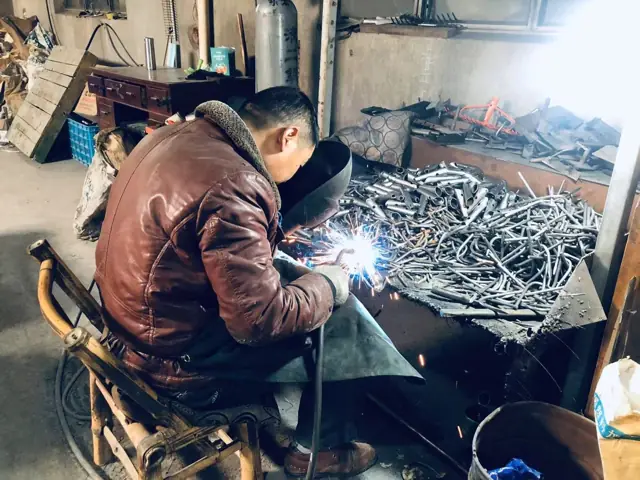
Most field failures in hand tools are joint failures, not material failures. The pivot of a pruner carries the whole cutting load, and how it is joined decides whether the tool stays aligned after ten thousand cuts.
- What enters
- Prepared components, joint features and an agreed assembly sequence.
- Control point
- Fit, heat input and sequence must protect alignment and the load path through the joint.
- A buyer should ask
- Which joint carries load, and which one controls alignment?
- OptionHow commonRelative costWhy it matters
- RivetingEverywherePopularity 5 of 5LowRelative cost 1 of 5Standard pivot joint for shears and secateurs; cheap and commonBuyer viewThe pivot rivet is the single joint that decides whether a pruner still cuts cleanly after a season, and it is specified by clamp load and by whether it can be re-tensioned, not by rivet diameter alone.Production viewSet force is our control point rather than set height — a rivet closed to the right dimension at the wrong force gives a pivot that feels correct on the bench and loosens after a few thousand cycles.
- Bolted jointsRegularPopularity 3 of 5Below averageRelative cost 2 of 5Adjustable pivots or handle attachment; costs more than rivetingBuyer viewA bolted pivot is the serviceable answer: it can be re-tensioned by the user and it is what lets a tool be sold with a sharpening or maintenance story, at the cost of a fastener that can also be lost.Production viewWe specify the locking method with the fastener — a nylon insert or thread-locking patch is what keeps a torque figure meaningful after vibration, and it is a consumable that does not survive repeated disassembly.
- Snap-fitCommonPopularity 4 of 5LowRelative cost 1 of 5Plastic housings clip together; cheap, very common on mass toolsBuyer viewSnap-fits remove fasteners and assembly labour entirely, which is why they dominate mass-market housings; the design question is whether the joint must ever be opened again, because most snap-fits are designed to close once.Production viewCantilever strain at assembly is what decides whether a snap survives — over-strain does not break the hook, it creeps, and the housing that clipped tight at assembly rattles by the time it reaches a shelf.
- Press-fitRegularPopularity 3 of 5LowRelative cost 1 of 5Ferrule onto handle or blade tang; cheap, common assembly methodBuyer viewA press-fit ferrule or tang holds by interference alone, so the joint's strength lives entirely in a tolerance pair — specify the fit, not the nominal diameter, or you are trusting two independent tolerance stacks to meet.Production viewWe control both halves of the interference rather than one, because a fit assembled at the loose end of both tolerances still presses together and simply does not hold the load it was designed for.
- Spot weldingOccasionalPopularity 2 of 5Below averageRelative cost 2 of 5Joins metal frame assemblies; moderate cost, less used on hand toolsBuyer viewSpot welding is fast and cheap on sheet assemblies, and its weakness is that quality is invisible from outside: a weld that looks identical can be a fraction of the strength if the current or the electrode was wrong.Production viewWe verify by destructive peel on samples rather than by appearance, because the nugget is inside the joint — a surface indentation proves the electrode arrived, not that the material fused.
- MIG weldingOccasionalPopularity 2 of 5MidRelative cost 3 of 5Welds heavier long-handled tool assemblies; costlier than spot weldingBuyer viewMIG suits the heavier long-handled assemblies where a continuous weld carries real load, and it brings heat distortion with it, so any part that must stay straight needs a fixture and, often, a stress-relief step afterwards.Production viewHeat input is the variable we manage, not travel speed alone — the same weld laid too hot burns through thin wall and too cold leaves lack of fusion, and only one of those two is visible to the welder.
- BrazingRarePopularity 1 of 5Above averageRelative cost 4 of 5Premium blade-to-tang joints; rare and costly in mass-market channelBuyer viewBrazing joins dissimilar metals below their melting point, which is how a hard blade meets a tough tang without destroying either, and it is a premium, low-volume answer priced by filler metal and labour.Production viewJoint gap is what makes a braze work — capillary action needs a narrow, even clearance, so we control the fit-up; a gap opened up to be forgiving produces a joint that is mostly filler and mostly weak.
- Over-moulded jointsCommonPopularity 4 of 5MidRelative cost 3 of 5Bonds soft grip onto handle body; common on ergonomic mid-tier linesBuyer viewOver-moulding bonds the grip to the handle as one part, which removes the peel and twist failures of a slid-on sleeve; the specification that matters is substrate compatibility, and it is set at the material choice, not the moulding.Production viewWe treat the substrate surface as part of the joint — mould release, dust or a fingerprint at the interface is enough to turn a chemical bond into a mechanical one, so handling between shots is controlled.
- Adhesive bondingRegularPopularity 3 of 5Below averageRelative cost 2 of 5Glues ferrules and labels; moderate cost, fairly common assembly stepBuyer viewAdhesive is the flexible answer for ferrules and labels, and its performance is entirely a function of surface preparation and cure conditions, which means it is the joint most sensitive to a change of shift or season.Production viewSurface energy is what we prepare for — a degreased and abraded surface bonds and an as-moulded polyolefin surface does not, regardless of which adhesive is on the datasheet.
4.6 Surface treatment
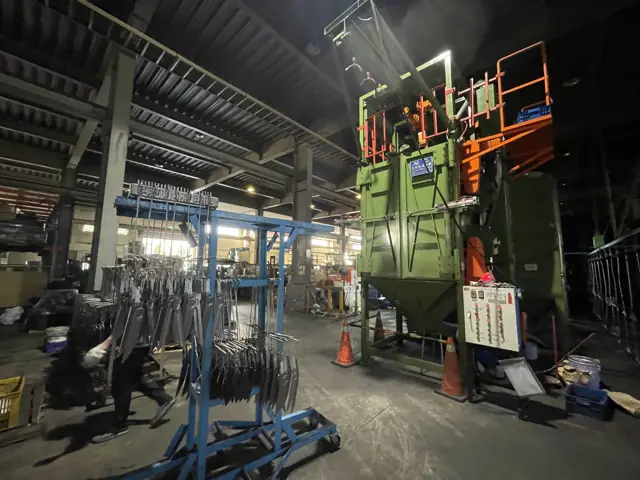
A protective surface is a stack, not a colour. Preparation, protective layer and topcoat are three separate costs and three separate control points, and salt-spray performance comes from the whole stack rather than from the visible top.
- What enters
- A cleaned, prepared surface and a defined treatment route.
- Control point
- Preparation, coverage in corners and cure must suit the exposure the tool will actually see.
- A buyer should ask
- What environment and service life will the product face — and for how many hours must it resist it?
Existing technical diagram
- OptionHow commonRelative costWhy it matters
- Zinc platingEverywherePopularity 5 of 5LowRelative cost 1 of 5Default cheap rust protection for small steel parts and bladesBuyer viewZinc is sacrificial protection, so what you are buying is thickness and passivate, not appearance: the coating corrodes in place of the steel, and salt-spray hours scale with how much of it there is.Production viewWe watch hydrogen embrittlement on hardened parts — plating charges hydrogen into high-hardness steel, and the bake that drives it back out has to happen within hours of plating or the part is already compromised.
- Nickel-chrome platingOccasionalPopularity 2 of 5Above averageRelative cost 4 of 5Decorative premium finish; pricier, used mainly on higher-end linesBuyer viewNickel-chrome is a decorative stack, not a single layer: the corrosion resistance lives in the nickel underneath and the chrome is a thin bright top, so a specification that names only chrome has specified the wrong thing.Production viewCoverage in recesses is where this finish fails — plating current follows geometry, so inside corners and blind features receive the least deposit, and that is exactly where the first rust appears.
- DacrometRarePopularity 1 of 5Above averageRelative cost 4 of 5Specialist corrosion coating; rare in consumer garden tools, costlyBuyer viewA zinc-flake coating gives high salt-spray resistance at low coating thickness and without the hydrogen embrittlement risk of electroplating, which is why it appears on high-strength fasteners and rarely on consumer tools, where it is hard to justify on price.Production viewIt is a dip-spin and bake process rather than a plating bath, so the control points are coating weight and cure temperature — an undercured film looks finished and wipes off in handling.
- Powder coatingCommonPopularity 4 of 5Below averageRelative cost 2 of 5Durable colour finish on metal heads; moderate cost, fairly commonBuyer viewPowder gives a thick, durable, colour-matched film in one pass with no solvent, and its real limitation is edges: powder pulls away from a sharp edge as it flows, so edge corrosion is the failure to design against.Production viewPre-treatment decides adhesion far more than powder quality does — a phosphate or equivalent conversion coat is what the film keys into, and a coating applied over a poorly cleaned part will pass inspection and lift in the field.
- Wet paintRegularPopularity 3 of 5LowRelative cost 1 of 5Cheap colour coat on lower-cost ranges; less durable than powderBuyer viewWet paint is the cheapest way to put colour on metal and the least durable in service, which makes it the right answer for a display surface and the wrong one for a wear surface such as a spade blade.Production viewFilm build and cure are the controls, and both are easy to get wrong quickly — paint applied heavy to cover a poor surface runs, and paint cured short stays soft enough to mark in the carton.
- E-coatRarePopularity 1 of 5MidRelative cost 3 of 5Electro-deposited priming; rare for hand tools, more of an automotive processBuyer viewElectro-deposited primer coats complex geometry evenly, including inside recesses that spray cannot reach, which is why it is an automotive standard; on hand tools it usually only makes sense as a primer under a topcoat.Production viewThrowing power is the property being bought — the deposited film insulates as it builds, which is what drives coating into shadowed areas, so the part must be racked to let the bath drain rather than trap.
- AnodisingOccasionalPopularity 2 of 5MidRelative cost 3 of 5Colours and protects aluminium parts; pricier than plain paintBuyer viewAnodising converts the aluminium surface itself rather than adding a layer, so it cannot chip; what it can do is vary in colour between batches and alloys, which matters when a part must match another part.Production viewAlloy and temper drive the colour, so we keep a colour-critical part on one alloy and one supplier — the same anodise recipe on a different 6000-series lot comes out a visibly different shade.
- PolishingRegularPopularity 3 of 5Below averageRelative cost 2 of 5Bright blade finish for shelf appeal; moderate labour costBuyer viewPolishing is bought for the shelf, and it is labour, so it scales linearly with volume rather than falling — on a bright blade it is often the largest single finishing cost and the easiest place to over-specify.Production viewWe control the abrasive sequence rather than the final buff, because a skipped grit leaves scratches that the buff makes shinier instead of removing, and they only become visible under retail lighting.
- Sand-blastingOccasionalPopularity 2 of 5LowRelative cost 1 of 5Surface prep before coating; cheap step, not used on every SKUBuyer viewBlasting is surface preparation, not decoration: it gives a coating something to key into and removes scale, and skipping it is the most common reason a perfectly good coating lifts off a perfectly good part.Production viewMedia and pressure set the profile, and profile is what adhesion depends on — too aggressive on thin sheet also induces stress and warps the part, so the blast is matched to the section.
- Lacquer or oil on woodOccasionalPopularity 2 of 5LowRelative cost 1 of 5Finish for timber handles only; cheap, relevant to wood SKUsBuyer viewThe choice is a maintenance decision you are making for the end user: lacquer seals and eventually chips, oil penetrates and needs re-application, and each implies a different care instruction on the pack.Production viewMoisture content at finishing is the control point — finish applied over timber that has not stabilised traps moisture, and the handle later checks and lifts the film from underneath.
- Heat transfer printRegularPopularity 3 of 5LowRelative cost 1 of 5Cheap branding and graphics onto plastic handles; fairly commonBuyer viewHeat transfer puts full-colour graphics onto a moulded handle cheaply and is the standard route for branding plastic, with the limitation that it sits on the surface and abrades where the tool is actually held.Production viewDwell, temperature and pressure have to suit the substrate — the same foil that transfers cleanly to polypropylene will not key to a soft TPR grip, so the print area is placed on the rigid component.
- Laser markingRegularPopularity 3 of 5Below averageRelative cost 2 of 5Permanent blade branding; moderate cost, common on premium tool linesBuyer viewLaser marking is permanent and cannot be counterfeited off the part, which is why it carries brand, grade and traceability data on premium lines where a printed mark would wear away.Production viewOn hardened steel we mark with parameters that do not re-temper the surface — an over-powered mark puts a local heat-affected zone into a cutting edge, and it is a soft spot exactly where the edge works.
4.7 Inspection and release
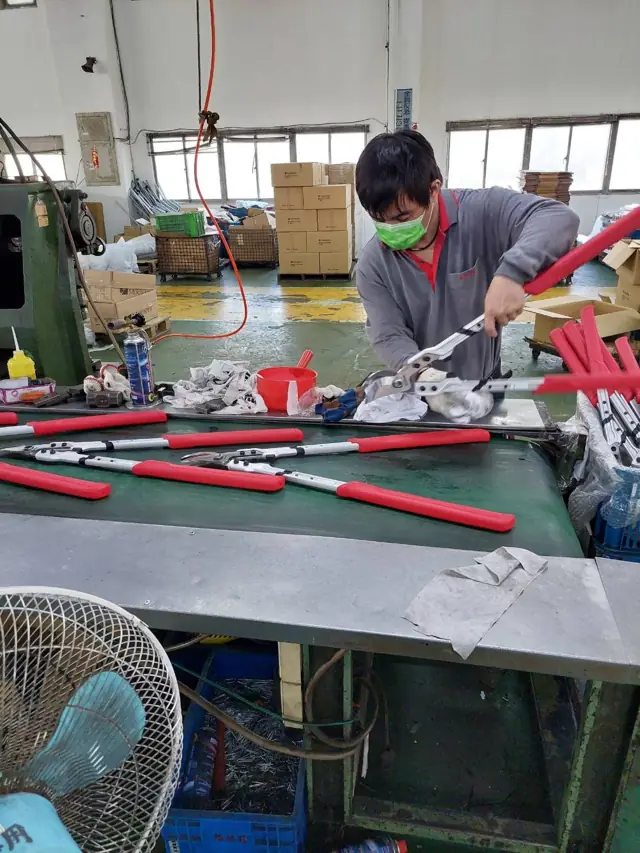
The last gate is the only one a buyer can audit after the fact. Sampling plan, the tests chosen and the release record are what turn a finished pallet into a defensible commercial hand-off.
- What enters
- Finished goods, packaging requirements and agreed checkpoints.
- Control point
- The sampling plan and release criteria have to be agreed before production, not after a rejection.
- A buyer should ask
- What must be verified before release, and who signs it?
- OptionHow commonRelative costWhy it matters
- Hardness samplingRegularPopularity 3 of 5LowRelative cost 1 of 5Batch check of blade hardness; low-cost routine sampling stepBuyer viewA hardness figure is only as good as the plan that produced it: ask for the sampling frequency and the band, because a certificate quoting one number for a whole shipment tells you nothing about consistency.Production viewWe take readings on a prepared surface rather than through plating or scale, because a reading taken through a coating reads soft and will have someone chasing a heat-treatment problem that does not exist.
- Open/close cycle lifeOccasionalPopularity 2 of 5Below averageRelative cost 2 of 5Durability test for shears and loppers pivots; moderate extra costBuyer viewCycle testing is the only test that finds pivot loosening and spring fatigue before the market does, and the number to agree is cycles under load with a defined pass criterion — not simply 'it still opens'.Production viewWe watch the pivot for wear rather than the blade for sharpness in this test — in almost every cycle-life failure the geometry opens up first, and the loss of cutting quality is a symptom of that, not a separate fault.
- Salt-spray hoursOccasionalPopularity 2 of 5Below averageRelative cost 2 of 5Corrosion test for plated parts; moderate cost, not every SKUBuyer viewSalt spray is a comparative screen, not a prediction of years in a garden; it is useful for holding a coating supplier to a standard and misleading if quoted as a service-life claim.Production viewWe test the assembled part rather than the plated component, because failure almost always begins at an edge, a fastener or a joint where two metals meet — the flat, easy surfaces are never the problem.
- Dimensional AQLCommonPopularity 4 of 5LowRelative cost 1 of 5Standard incoming and outgoing dimension check; cheap and commonBuyer viewThe AQL level and the inspection standard are the commercial terms here: they define exactly how many defects a lot may contain and still be accepted, and agreeing them before production is what makes a rejection arguable rather than personal.Production viewWe keep incoming and outgoing checks on the same datums as the drawing, because a dimension measured from a different reference is a different dimension, and most disputes we have seen begin there.
- Edge & function checkEverywherePopularity 5 of 5LowRelative cost 1 of 5Near-universal sharpness and function check before packing; low costBuyer viewThis is the last check that reflects what the end user will experience in the first five seconds out of the pack, and it is cheap enough to run at full coverage rather than by sample.Production viewWe use a consistent cutting medium so the result means something across shifts — a subjective sharpness check varies with the operator, and it is the one test where that variation reaches the customer directly.
- Joint pull testOccasionalPopularity 2 of 5Below averageRelative cost 2 of 5Destructive test on riveted or bolted joints; occasional, moderate costBuyer viewThis is destructive, so it is a process verification rather than a shipment gate: it tells you the joint the line is producing is sound, which is a different question from whether a given carton is good.Production viewWe record the failure mode, not just the load — a joint that fails by tearing the parent material is a correct joint at its limit, and one that fails at the interface is a process problem regardless of the number.
- Pack drop testRegularPopularity 3 of 5LowRelative cost 1 of 5Standard transit test for retail packaging; cheap and commonBuyer viewThe drop test protects margin rather than product: transit damage arrives as a retailer deduction, and the test defines the pack that survives the distribution route the goods will actually travel.Production viewWe test the shipping unit as it will actually be palletised, since a carton that passes alone can still fail in a stack — most transit damage we have seen is compression over time, not a single impact.
- Barcode & label checkEverywherePopularity 5 of 5LowRelative cost 1 of 5Mandatory retailer compliance scan; cheap, done on every unitBuyer viewThis is compliance, not quality: an unreadable barcode or a missing country-of-origin mark stops goods at a distribution centre as effectively as a broken tool, and it is the cheapest failure on this list to prevent.Production viewWe verify by scanning under the same conditions a retailer will, because a code that reads on a bench scanner can fail at a warehouse gun if the print contrast or the quiet zone is marginal.
5 Material families
Nine families. The grade is a trade-off, never an upgrade — every point of hardness is bought with toughness.
A garden tool is rarely one material. These nine families cover a hand-tool programme, and the same nine are tracked as live inputs on the AsiaSource, so a grade discussed here can be checked against this week's price movement.
How common is how often the option appears in garden hand tools sold through European and North American DIY retail. Relative cost is its cost against the alternatives in its own group — a position, not a price. Both are ordinal judgements about that channel rather than market data.
Metal manufacturing is our core. Plastic and timber components are supplied through specialist partners.
5.1 Blade and spring steel
Carbon and low-alloy grades take a hard edge cheaply but must be protected against corrosion. Hardenable stainless grades cost more per kilo and skip the plating step entirely.
- Used for
- Cutting blades, anvils, springs, hardened working edges.
- What moves cost
- Harder grades hold an edge longer but are more brittle and slower to machine.
Grades commonly specifiedSK565Mn420J2SUS420J2SUS440C
- OptionHow commonRelative costWhy it matters
- Blade and spring steelEverywherePopularity 5 of 5MidRelative cost 3 of 5Core material for every cutting edge; mid-range costBuyer viewThis family is where edge retention is bought and where corrosion resistance is not — a carbon or low-alloy grade takes a hard, fine edge cheaply and then depends entirely on the finish applied over it.Production viewGrade and hardness band have to be chosen together with the intended use: the same steel at HRC 58 holds an edge and chips on a knot, and at HRC 52 blunts sooner and survives the same knot.
5.2 Stainless steel
304 resists corrosion best but cannot be hardened, so it belongs on bodies and fasteners rather than on edges. 410 and 420 can be hardened and are the usual choice when an edge also has to resist moisture.
- Used for
- Corrosion-exposed parts, fasteners, sprayer components.
- What moves cost
- Removes a plating operation, but the raw price per kilo is higher and machining is slower.
Grades commonly specified304410420
- OptionHow commonRelative costWhy it matters
- Stainless steelRegularPopularity 3 of 5Above averageRelative cost 4 of 5Premium rust-resistant blades and trowels; pricier than carbon steelBuyer viewStainless arriving at intake is two different materials: austenitic 304 cannot be hardened by heat treatment and belongs on bodies and fasteners, while martensitic 410 and 420 can — and since those two are both magnetic and visually identical, dropping the lower-carbon 410 into an edge application is the substitution no goods-in check short of a material test will catch.Production viewWe keep martensitic and austenitic stock physically separated on the rack, because the two look identical under a coolant film and a mixed batch is only discovered after quench, when half the parts come out soft.
5.3 Plating and coating
A coating is specified by the hours of salt-spray resistance it must deliver, not by how thick it looks. Coverage inside corners and around pivots is where a cheap line is exposed.
- Used for
- Corrosion protection and appearance on carbon-steel parts.
- What moves cost
- Tracks layer thickness and required salt-spray hours. Specify the hours, not the thickest option.
Grades commonly specifiedZincNickel-chromeDacrometPowder coatE-coat
- OptionHow commonRelative costWhy it matters
- Plating and coatingEverywherePopularity 5 of 5Below averageRelative cost 2 of 5Near-universal rust protection on steel parts; low added costBuyer viewTreat this as a stack with a stated performance rather than a colour: preparation, protective layer and topcoat are three separate costs, and salt-spray performance comes from all three rather than from the visible top.Production viewWe size the protection to the exposure the tool will actually see — a coating specified for coastal or professional grounds use is a different stack from one for a domestic shed, and over-specifying it is as wasteful as under-specifying it.
5.4 Aluminium
Wall thickness, not alloy, is usually what a buyer feels. A thinner wall is lighter and cheaper and flexes more under load, which matters on a three-metre pole and not at all on a short handle.
- Used for
- Telescopic poles, light frames, lightweight handles.
- What moves cost
- 6061 is stronger; 6063 extrudes into finer profiles. Thinner wall is cheaper and less stiff.
Grades commonly specified60616063Wall thicknessAnodised
- OptionHow commonRelative costWhy it matters
- AluminiumRegularPopularity 3 of 5MidRelative cost 3 of 5Lightweight shafts and heads on premium lines; moderate costBuyer viewThe temper designation is the specification, not the alloy number: 6061-T6 and 6061-T4 are the same metal at different yield strengths, and a shaft supplied in the softer temper bends permanently under a load the harder one springs back from.Production viewExtrusion tolerance on wall thickness is what we watch at intake — a tube under nominal wall passes a diameter gauge and still buckles at the ferrule, so we gauge wall, not just outside diameter.
5.5 Rigid plastics
Resin choice sets stiffness, impact behaviour and how the part ages in sunlight. Glass-filled nylon is specified where a plastic part has to carry real load, such as a gear or a latch.
- Used for
- Housings, sprayer bodies, gear parts, rigid handle cores.
- What moves cost
- Glass fill raises stiffness, heat resistance and price. Resin is traded, so quotes move with the index.
Grades commonly specifiedPPPEABSPAPA+GF
- OptionHow commonRelative costWhy it matters
- Rigid plasticsEverywherePopularity 5 of 5LowRelative cost 1 of 5Dominant for handles and housings; cheapest structural materialBuyer viewResin at intake is defined by grade and filler, not by the word 'nylon': PA6 unfilled and PA6-GF30 differ by roughly a factor of three in stiffness, and glass content is the single line most often quietly dropped from a bill of materials.Production viewWe take moisture seriously on polyamide because it is hygroscopic — resin that has sat unsealed hydrolyses in the barrel and moulds parts that look correct and snap at the boss, so it is dried to specification before every run.
5.6 Grips and soft compounds
The grip is the only part of a tool the user judges by touch. An over-moulded soft layer bonded to a rigid core feels integral; a slip-on sleeve or a dip coating costs less and can rotate or peel in service.
- Used for
- Handles, over-moulded grips, sleeves, cushioned contact areas.
- What moves cost
- A two-shot over-mould costs more than a slip-on sleeve or a dip coating.
Grades commonly specifiedTPRTPEThermoplastic rubberPVC dip
- OptionHow commonRelative costWhy it matters
- Grips and soft compoundsEverywherePopularity 5 of 5Below averageRelative cost 2 of 5Soft overmould grip now a standard ergonomic selling pointBuyer viewSoft grip is now an expected feature rather than a premium one, and the buying decision is durability: hardness, substrate compatibility and resistance to oils and UV are what separate a grip that lasts from one that goes tacky.Production viewWe match the compound to how the tool is held and stored — an elastomer that performs in the hand can still degrade in a hot shed or under sunlight, and that failure arrives long after any incoming inspection.
5.7 Timber
Grain direction and moisture content decide whether a wooden handle survives its first hard season. Ash flexes, beech machines cleanly, bamboo is a laminate with its own behaviour.
- Used for
- Wooden handles and shafts.
- What moves cost
- Certified kiln-dried stock carries a premium. Grade drives the reject rate more than the price per piece.
Grades commonly specifiedBeechAshBambooFSC / PEFC stock
- OptionHow commonRelative costWhy it matters
- TimberOccasionalPopularity 2 of 5MidRelative cost 3 of 5Heritage handle material for spades and forks; pricier than plasticBuyer viewMoisture content is the whole specification: a handle fitted at 18% and shipped into a heated European interior shrinks in its ferrule and loosens, so the number to agree is kiln-dried moisture at packing, not species alone.Production viewWe look at grain run-out rather than surface appearance — a handle whose grain leaves the side within the length of the shaft breaks across the fibres under a prying load no matter how clean the finish looks.
5.8 Fabric and textile
Textile parts fail at seams long before the cloth wears out, so stitch density and seam construction matter more than the headline fabric name.
- Used for
- Gloves, storage bags, vests, blinds and covers.
- What moves cost
- Denier, coating and stitch density set the cost. A coating adds water resistance and price.
Grades commonly specifiedCanvasPolyesterCoated fabricMesh
- OptionHow commonRelative costWhy it matters
- Fabric and textileOccasionalPopularity 2 of 5LowRelative cost 1 of 5Gloves and straps only; low cost, limited to few SKUsBuyer viewTextiles carry a different compliance burden from metal: dyes, coatings and trims are what a chemical-restriction question lands on, and the substantiation is held by the mill rather than by the tool factory.Production viewWe manage this family through the supply chain rather than the line — the controls that matter are documentation and consistency at the mill, because a fault in a roll is not correctable downstream.
5.9 Packaging board
Board is the material most often changed late and most often responsible for a compliance problem at the destination. It is covered in its own section below.
- Used for
- Export cartons, colour boxes, hang cards and inserts.
- What moves cost
- Recycled content and mono-material choices affect both price and destination compliance.
Grades commonly specifiedCorrugatedFolding boxboardRecycled contentMoulded pulp
- OptionHow commonRelative costWhy it matters
- Packaging boardEverywherePopularity 5 of 5LowRelative cost 1 of 5Universal for cartons and header cards; cheapest packaging materialBuyer viewBoard is specified by construction and burst or edge-crush strength, not by thickness, and it is the cheapest place on a bill of materials where under-specifying reliably turns into transit damage deductions.Production viewWe set board grade against the stacking height and the humidity of the route — board loses a significant part of its compression strength when it takes up moisture, and a long sea leg is exactly where that happens.
6 How a tool fails
Hardness is set by how the tool is expected to fail: blunt, fractured or fatigued. Three groups, three bands, three different answers.
Hardness is the number most often quoted about a hand tool and the one most often quoted wrongly. It is not a quality score, and harder is not better — every point of hardness is bought with toughness. What decides the number is the way the tool is expected to fail.
Three groups, three failure modes, three different answers. The bands below are the ones Birdland works to; read them next to each other and they stop looking arbitrary.
6.1 Tools that cut — the failure is blunt
A pruner that goes dull has failed, even though nothing broke. Edge retention comes first, so these run the hardest bands on the site.
The counter blade is softer on purpose. Read the two halves of that table again: the same SK5 is specified at 56–60 on the cutting blade and 50–56 on the blade it closes against. Two equally hard blades chip each other. A softer counter blade wears sacrificially and keeps the cutting edge alive, which is why a pruner that has been resharpened twice still cuts and a “fully hardened” one has a notch in it.
6.2 Tools that lever — the failure is fracture
A spade meets stones, roots and frozen ground, and it gets used as a lever whether or not anyone intended it to. Its failure mode is a crack, not a dull edge, so the hardness is deliberately capped: the blade should bend before it breaks.
Twenty points of hardness below a pruner blade, on purpose. A spade at HRC 58 would hold a superb edge and snap the first time it was levered against a root.
Digging tools fail at the neck, where the bending moment concentrates — so the structure there matters more than the steel. A forged neck carries continuous grain around the bend; a cast one has random grain, and any porosity becomes a fracture origin. It is the one place on a long-handled tool where forging earns its cost.
The handle carries the same logic, and the specification most often left incomplete is the aluminium: a tube is defined by wall thickness and temper, not by diameter.
Handles: temper, glass loading and what they cost later
6061-T6 is materially stronger than the same tube in T5. A drawing that names the alloy but not the temper has not specified anything, and the difference shows up the first time a three-metre pole is levered.
A glass-filled core is chosen the same way. PA6-GF30 is the usual balance because above it the part stops bending and starts shattering, and on a consumer tool a handle that deforms is safer than one that fails suddenly. Glass also abrades the mould, so a higher loading quietly shortens tool life — a cost that lands on the second order, not the first.
6.3 Tools that spring — the failure is fatigue
A rake tine is never asked to cut and rarely asked to resist a single large load. It is asked to bend and come back, thousands of times. What matters is the elastic limit and the cycle life, not edge retention.
A tine that stays bent has failed as completely as one that snaps. 65Mn is a spring steel and its heat treatment is aimed at return, not at hardness — the same grade appears in the pruner spring for the same reason.
6.4 Three rules the numbers encode
- A band, never a maximum
- Every figure on this page is a range. A specification that names only a ceiling invites a plant to hit it, and the top of the range is where brittleness begins. A band fixes the floor and the ceiling together.
- Hard only where it wears
- The 40Cr pivot set is induction hardened at the bearing surface and left tough through the body. A pin hardened all the way through does not wear — it cracks.
- Stainless is a trade, not an upgrade
- 420J2 gives up roughly four to six points against SK5 in the same position. It is the right answer for wet use, coastal air and grounds-maintenance fleets that will never resharpen. It is the wrong answer for professional pruning in a dry climate, and a supplier who offers it as a free improvement has not priced the edge you are losing.
Ask any supplier for: the hardness band rather than a single figure, the sampling plan that confirms it, and whether the resulting report travels with the shipment. A band with no sampling plan behind it is a sentence, not a control.
Every grade above is one route among several for that part. The full set — 159 material routes across 38 part types, with the process and finish options that go with each — is on the AsiaSource, or type a grade such as SK5 or 420J2 into the Terminal to go straight to it.
7 Nuts, bolts and the joint
A hand tool fails at its joint more often than at its blade. The nut decides whether that joint can be brought back or has to be thrown away.
Every tool on this page is at least two parts held together. The blade gets the specification; the fastener gets whatever is in the bin. That is why a pruner whose blade still takes an edge can already be finished — the pivot has gone slack, and nothing on it can be tightened.
7.1 The pivot decides whether the tool is repairable
One choice governs the life of the product: can the user re-tension the joint, or not.
| Joint | What holds it | User can re-tension | Where it belongs |
|---|---|---|---|
| Riveted or peened pin | A deformed head | No — drilling it out ends the tool | Entry-price shears where no service is expected |
| Bolt + nylon-insert lock nut | Nylon gripping the thread | Yes, with two spanners | The ordinary professional pruner pivot |
| Bolt + all-metal prevailing-torque nut | A deformed thread crest | Yes, and it survives repeated opening | Wash-down, heat, or tools stripped each season for sharpening |
| Shoulder bolt + castle nut + split pin | A mechanical lock | Yes, and it cannot back off at all | Loppers and long handles, where leverage is high |
| Knurled or thumb nut | Hand tension | Yes, with no tools | Consumer tools sold on adjustability |
A rivet is a decision about the product's life, not about its price. It saves a few cents and removes service, resharpening back to a true edge, and any spare-parts programme. On a tool sold as repairable it is a contradiction the pack cannot hide.
7.2 The washer stack does more than the nut
7.3 What the fastener is made of
| Route | Belongs on | The trade |
|---|---|---|
| Zinc-plated carbon steel, class 8.8 | General dry use | Cheapest. The plating hours, not the steel, decide how long it looks new |
| Stainless A2 (304) | Wet use; skips plating entirely | A2-70 is around 700 MPa against class 8.8's 800 — stainless buys corrosion resistance, not strength |
| Stainless A4 (316) | Salt air and coastal fleets | Highest cost, same strength trade |
| Bronze or brass bush at the pivot | Tools sold on a smooth action | Wears sacrificially and protects the blade — a serviceable part, if you stock it |
Match the fastener to the handle, not to the blade. A stainless bolt through an aluminium pole is a small battery: aluminium is the anode and corrodes at the interface. A “stainless upgrade” can arrive as a seized telescopic joint after one coastal season. Isolate it with a nylon bush or a coated fastener.
Threads, lockers and the standards to quote
Rolled threads follow the grain of the material instead of cutting across it, so they are both stronger and cheaper at volume; cut threads belong on repairs and one-offs. Where a joint is never meant to be opened, a medium-strength anaerobic locker does a lock nut's work for less. Where adjustment is a selling feature it is the wrong answer — the first re-tension breaks the bond and nothing replaces it.
A nylon insert is a consumable. It grips by being deformed, so a nut that has been off and on a few times no longer holds what it did. If a tool is meant to be stripped for sharpening every season, specify the all-metal nut and accept the higher torque to fit it.
Ask any supplier for: the nut standard by number (ISO 7040 or DIN 985 for nylon-insert, DIN 980 for all-metal), a drawing of the washer stack rather than a photograph of the finished tool, the salt-spray hours for the plating on the fastener and not only on the blade, and confirmation that the pivot can be re-tensioned with tools a gardener already owns.
8 Packaging
Where a programme meets destination regulation, and the block buyers negotiate least and pay for most.
Packaging is where a programme meets destination regulation, and where a late change costs most. Four things are being specified at once: the format that protects the tool, the presentation that sells it, the unit that carries it, and the marks the destination requires.
8.1 Formats
How common is how often the option appears in garden hand tools sold through European and North American DIY retail. Relative cost is its cost against the alternatives in its own group — a position, not a price. Both are ordinal judgements about that channel rather than market data.
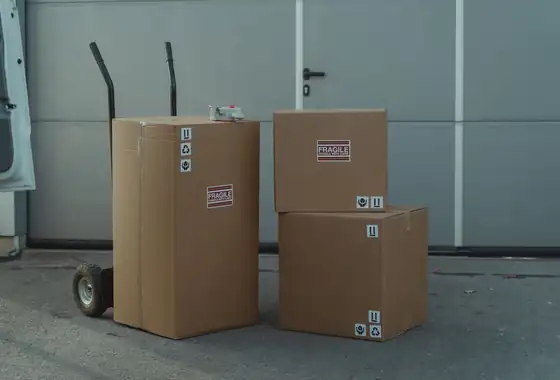
- Corrugated export cartonEverywherePopularity 5 of 5Below averageRelative cost 2 of 5Standard bulk shipping carton used for nearly every export runBuyer viewThe export carton is the unit your freight and your damage claims are both calculated on, so carton dimensions deserve the same attention as the product — a carton that palletises badly costs freight on every shipment.Production viewWe work the carton back from the pallet footprint rather than forward from the product, because a few millimetres of overhang loses a full column on the pallet and pays for itself in wasted volume every run.
- Colour boxCommonPopularity 4 of 5Above averageRelative cost 4 of 5Printed retail box for premium SKUs; pricier than plain cartonBuyer viewA printed retail box is a marketing asset with a long lead time and a minimum order quantity of its own, and it is usually the component that fixes how early artwork must be frozen in a programme.Production viewColour consistency across print runs is the recurring issue, so we work to an approved physical proof rather than a screen reference — the same file prints differently on different board and different presses.

- Hang tag / header cardEverywherePopularity 5 of 5LowRelative cost 1 of 5Cheap card for blister and peg-hook display; near-universalBuyer viewThe header card is what makes a product hang on a peg hook, and its die-cut and hole position are retailer-specific — this is where a pack fails a planogram rather than a quality check.Production viewBoard grain direction relative to the hang hole is what stops a card tearing on the hook, and it is easy to lose when artwork is resized late without re-checking the die.
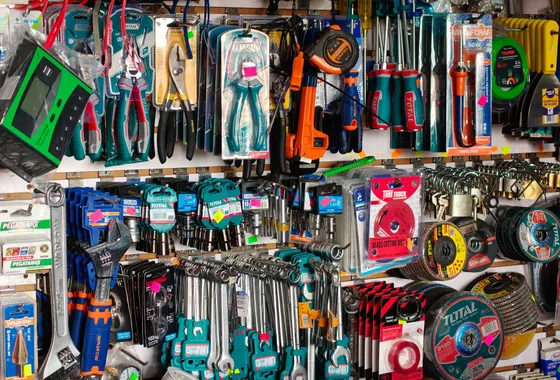
- Blister packCommonPopularity 4 of 5MidRelative cost 3 of 5Plastic-and-card display pack for small tools; under regulatory pressureBuyer viewBlister presents the tool well and is under active regulatory pressure over plastic content in several markets, so it is worth confirming that a format is still compliant in the destination before committing artwork and tooling.Production viewSeal temperature and dwell are the controls: an under-sealed blister opens in transit and an over-sealed one cannot be opened by the customer without tools, and the acceptable window between them is narrow.
- Skin packOccasionalPopularity 2 of 5MidRelative cost 3 of 5Film-wrapped display for irregular shapes; less common than blisterBuyer viewSkin packing suits irregular shapes that a blister tool cannot economically match, and it trades a lower tooling cost for a slower line rate and a less premium shelf presence.Production viewThe film has to draw evenly over the product's high points, so we control heating and vacuum together — a thin spot over a corner is where the pack later splits in handling.
- Paper-and-plastic compositeRegularPopularity 3 of 5Below averageRelative cost 2 of 5Hybrid format cutting plastic content; growing under packaging regulationBuyer viewThese hybrid formats exist to cut plastic content ahead of packaging regulation, and the practical question is whether the format is separable for recycling in the destination market, because that is what the rules actually address.Production viewThe paper and the film respond differently to heat and humidity, so we prove the combination through a transit test rather than assuming it behaves like the blister it replaces.
- Shrink filmRegularPopularity 3 of 5LowRelative cost 1 of 5Cheap overwrap for bundling multipacks; fairly common, low costBuyer viewShrink is the cheapest way to bundle a multipack, and it is a bundling material rather than a protective one — it holds units together and does nothing about compression or impact.Production viewTunnel temperature and line speed set the shrink, and over-shrinking is the failure we watch for: film pulled too tight deforms the pack it is holding, particularly on a colour box.
- Label setEverywherePopularity 5 of 5LowRelative cost 1 of 5Barcode and care labels; cheap, applied to almost every unitBuyer viewLabels carry the regulatory content — origin, safety marking, barcode — and they are the component most often revised late, so it is worth keeping them on a separate artwork approval from the pack itself.Production viewAdhesive choice is matched to the surface and the temperature of the route: a label that stays put on a warm carton can lift from a cold, waxy or textured one, and that is discovered at the destination.

- Void fillRegularPopularity 3 of 5LowRelative cost 1 of 5Paper or foam fill for protection; cheap, used selectivelyBuyer viewVoid fill is bought to stop movement inside the carton, and its cost is trivial next to a damage claim, but it also adds volumetric weight — the cheaper fix is usually a carton that fits.Production viewWe prefer designing the movement out to filling it in, because fill settles during a long sea leg and the void it was there to occupy reappears somewhere around the middle of the journey.
- StrappingOccasionalPopularity 2 of 5LowRelative cost 1 of 5Secures bundled units or pallets; cheap, used only occasionallyBuyer viewStrapping secures bundles and pallets and is a handling decision rather than a product one; whether it is needed is a function of the route and the number of handovers, not of the goods.Production viewTension and edge protection go together — strapping pulled tight over an unprotected carton edge cuts into the board, and the pallet arrives secured by straps that are no longer holding anything.
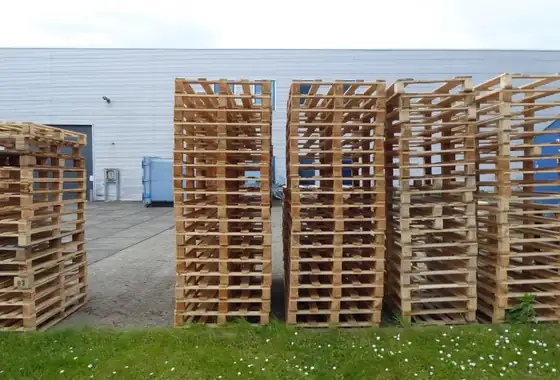
- PalletEverywherePopularity 5 of 5HighRelative cost 5 of 5Base unit for bulk transport; highest per-unit cost in groupBuyer viewThe pallet specification is a customs and cost item at once: heat-treated wood carries an ISPM 15 mark that timber packaging needs for most international movements, and pallet dimensions decide how much container volume you actually pay for.Production viewWe plan the load pattern before the first carton is printed, because pallet fit is set by carton size — changing a carton by a few millimetres afterwards is what turns a full pallet into a part-filled one.
8.2 Display and shelf presentation
A format protects the tool. A presentation decides how it is bought. The two are specified together, because the presentation is what dictates the die-cut, the board weight and the hole.
| Presentation | What the pack has to carry | Where it wins |
|---|---|---|
| Colour box the tools stand in | A die-cut insert sized to the tool, so two dozen pruners travel in one box and stand upright the moment the lid comes off. The insert is the drawing that matters, not the box | The everyday counter route: one carton, one SKU, and no shelf-filling labour at the store |
| Colour box with a printed window | The same insert plus a die-cut aperture, so a single tool shows through and is still fully enclosed | Gift and premium lines, where the box is part of what is being bought |
| Open-front display box | A perforated lid that tears away and leaves a tray the store can put straight on the shelf | Shelf-ready lines — the case is the display, so nothing is unpacked twice |
| Header card + euro slot | A folded card with a punched hanging hole sized to the retailer's own hook | The cheapest route onto a rail; the retailer owns the fixture |
| Blister or clamshell on a hook | A formed shell welded or folded to a printed backer | Small tools that need theft resistance and full-face print |
| Skin pack on board | Film drawn tight over the tool, plus a punched hole | Shows the real product shape with far less plastic than a blister |
| Counter unit (PDQ) | A small pre-filled tray shipped ready to stand on a counter | Impulse lines and seasonal add-ons |
| Floor or pallet display | A shipper that becomes a free-standing unit, with a printed header | Season openings, where the volume justifies the tooling |
Ask which hook it will hang on before drawing the hole. Rail systems, pegboard and slatwall all take a different hook, and a hole punched for the wrong one turns a compliant pack into a repack at the destination. This is the single most common late packaging change on a garden programme.
8.3 Racks and display units
Two different things get called a display: a fixture the retailer already owns, and a unit you ship. Which it is decides who pays for it, and whether you are quoting a pack or a piece of furniture.
| Rack | Life | What it is really for |
|---|---|---|
| Powder-coated steel wire rack or spinner | Years; usually returnable | Trade counters and hardware. Doubles as the brand's own footprint in store |
| Corrugated board PDQ or floor unit | One season, disposable | Promotions. Ships flat, costs least, and is thrown away rather than returned |
| Chipboard or MDF panel with pegs | Several seasons | Garden centres, where the unit has to look like fixture rather than packaging |
| Acrylic tray or riser | Long, but scratches | Premium and small parts; the most expensive per facing |
| Retailer's own slatwall or pegboard | Permanent, not yours | You supply a euro-slotted pack and nothing else — the fixture is already there |
8.4 The parcel network is not the shelf
A retail pack is designed to be stacked on a pallet and to look right under store lighting. A parcel pack is designed to be thrown. The same box rarely does both, and a pack that passes a retail brief can still fail its first month online.
Marketplace programme names, thresholds and test protocols change; treat the row above as the questions to ask and confirm each against the current seller or vendor manual for your account.
8.5 Lower-impact options
Each conventional format has a lower-impact route. Availability depends on the pack, the volume and the destination — tell us the market and the retail presentation, and the compliant routes can be quoted alongside the conventional ones.
| Lower-impact option | Replaces | Why buyers ask for it |
|---|---|---|
| FSC / PEFC certified board | Uncertified board | A baseline requirement for most large retail accounts. |
| Recycled-content board | Virgin board | Allows a declared recycled percentage on the pack. |
| Mono-material paper pack | Paper-plus-plastic blister | Recyclable without the consumer separating materials. |
| Moulded pulp or paper blister | PET or PVC blister | The main route to removing plastic from a retail pack. |
| Paper hang tab | Moulded plastic hook | Avoids a plastic line item on an otherwise paper pack. |
| Soy or water-based ink | Solvent-based ink | Lowers the solvent load in printing. |
| Paper or gummed tape | PP packing tape | The whole carton can enter one recycling stream. |
| Unprinted export carton | Full-colour outer | Lowest cost and lowest footprint for plain export. |
| Recycled or rPET film | PVC shrink film | A compromise where a film genuinely cannot be removed. |
| Heat-treated or plastic pallet | Untreated wood pallet | Meets ISPM-15 phytosanitary requirements on export. |
9 Certificates and declarations
A certificate is a document about a site, a scope and a date. Check all three, because a valid certificate for the wrong site is worth nothing.
Certification is no longer a differentiator in this trade; it is an entry condition. What still separates suppliers is whether the paperwork survives being checked — a scope that covers the product you are buying, a site address that matches the plant, and a date that is still live when the container sails.
9.1 What each mark covers
| Mark | What it actually certifies | Who asks for it | What to check on the document |
|---|---|---|---|
| FSC / PEFC | Chain of custody for timber and board — that certified fibre was tracked, not that a tree was certified | Most large EU and UK retail accounts, increasingly US | The CoC code, the claim type (100%, Mix or Recycled) and that the certificate covers the product group you are buying |
| EU deforestation rules | Due diligence that wood placed on the EU market is deforestation-free | Whoever imports into the EU — usually you, not the factory | Geolocation of the harvest area and a due diligence statement; confirm the phase-in date that applies to your operator size |
| amfori BSCI / Sedex SMETA | Labour and working conditions at a named site, on a named date | Nearly every EU and US retail account | The audit date, the rating or findings, and that the audited address is the plant that will make your goods |
| ISO 9001 / ISO 14001 | That a quality or environmental management system exists and is audited | Almost all trade buyers, as a baseline | Scope and site. A group certificate naming a different factory is not your certificate |
| REACH & SVHC | Restricted substances in the article — grips, coatings and plating as much as steel | EU importers | The substance list tested, the test date, and which part of the tool was sampled |
| CPSIA and California Proposition 65 | Lead and phthalate limits; warning obligations | US importers | The test report, and whether a warning is required on the pack for your channel |
| EN 388 with CE / UKCA | Mechanical performance of protective gloves | Anyone selling gloves into the EU or UK | The notified body, the performance levels claimed, and that the certificate is for this glove |
| Packaging EPR registrations | Who pays for the packaging waste in each market | Germany, France, Italy, Spain and others individually | Registration numbers held in the right name, and the on-pack marks each market requires |
| UK plastic packaging tax | Plastic packaging below the recycled-content threshold | UK importers | Evidence of recycled content, not a statement of intent |
| ISPM 15 | Heat treatment of wooden pallets and dunnage | Every destination, for wooden pallets | The stamp on the pallet itself, at loading |
| GS1 GTIN | That the barcode belongs to the brand owner | All retail | That the prefix is licensed to the brand, not borrowed from a supplier |
9.2 Reading a certificate
- Site, scope, date
- Three fields decide whether a certificate applies to your order. A live FSC certificate held by a trading company does not let the factory print the logo, and a social audit of a sister plant says nothing about the one running your line.
- A claim needs a chain, not a logo
- To put FSC on a pack, every party that takes ownership of the certified material needs its own chain-of-custody code — mill, converter, and the factory that assembles the pack. One missing link and the claim cannot be made, however certified the paper was.
- Audits expire; production does not
- Ask when the next audit falls and what happens to your shipments if it slips. A certificate that lapses mid-programme is a commercial problem, not a paperwork one.
Ask any supplier for: the certificate itself rather than a logo on a presentation, the scope page, and the name and address exactly as they appear on it. Then check that address against the plant you visited.
10 What a wholesaler expects
Most of what distinguishes suppliers at this level is not the tool. It is tooling ownership, sample discipline, documents and what happens when something goes wrong.
Importers, distributors and buying groups in Europe and North America, and the trading houses across Asia they compete with, converge on a short list of expectations. Almost none of it is about manufacturing. It is worth stating plainly, because it is what a first meeting is actually about.
10.1 Before the order
10.2 After it ships
Worth asking early: who owns the tooling, how many sample rounds are free, whether MOQ can be pooled across the range, and how long spare parts are held. Four questions, and the answers tell you most of what a supplier relationship will be like.
11 Cost structure
A landed price is four blocks. Most negotiations move only the first, and the last two are usually larger.
A landed price is four blocks, not one number. Most sourcing conversations move only the first; in a hand-tool programme the last two are frequently larger than the saving being negotiated on the first.
Run your own numbers: the landed-cost tool on the CostNow desk uses these same four blocks, with current material and freight readings already loaded.
12 See also
Where to go next, and what this page deliberately does not contain.
- AsiaSource — live material, freight and tariff readings, and the landed-cost tool referenced above.
- ABrief — the daily industry brief behind those readings.
- About — the confidentiality rule that governs what appears on this page.
- Contact — to discuss a production route against a real specification.
Diagrams on this page are schematic illustrations drawn for explanation. Process and material descriptions are general industry practice; the routes available for a given programme depend on the part, the volume and the origin. The two meters are ordinal judgements about the European and North American DIY retail channel, not measured market data.